
An AI answer can sound reliable before anyone has checked it. Specific dates, precise figures, and citations can give an unsupported statement the appearance of a settled fact. The wording may be convincing even when the evidence is missing. Knowing how to fact-check AI answers means testing the claims rather than trusting their presentation.
Not every sentence needs the same scrutiny. Prioritize claims you might publish, repeat, or use in a decision, then trace them to evidence. This works for fact-checking AI-generated content, from ChatGPT responses to search summaries.
Which AI Claims Should You Fact-Check First?
Start with the parts of an answer that have real consequences if they’re wrong. Dates, prices, percentages, quotations, legal requirements, product specifications, and named studies deserve particular attention. A wrong figure can alter a conclusion; a missing qualification can change who a rule applies to. Brainstorming ideas rarely need the same source-by-source investigation.
Ask what would happen if a particular statement turned out to be wrong. A stray date in brainstorming notes may be easy to correct. An incorrect eligibility rule in a client email could mislead someone into taking action. Check the details with consequences before polishing the explanation around them.
Presentation is not evidence. A named study, exact percentage, or official-sounding rule can still be wrong. Treat specificity as a reason to inspect the source, not a reason to accept the claim.
How to Verify AI-Generated Information Step by Step
Imagine asking an AI assistant about US wage requirements and receiving this statement: “The federal minimum wage increased to $15 an hour in 2026.” That single sentence combines a dollar amount, a government rule, and a date. It also implies the rate applies nationally, so the scope needs checking before you pass the claim to someone else.
Before relying on the statement, work through five checks. They address different failure points, from an invented citation to an overlooked exception. Move quickly on low-stakes questions; for consequential ones, keep every check that could change the decision:
- Extract the exact claim. Copy the sentence and identify the number, date, jurisdiction, and any implied exceptions.
- Find the original authority. Search for the relevant government agency, official documentation, original research, or published dataset rather than another AI summary.
- Compare the wording. Check whether the source actually states the same thing, not merely something related to the topic.
- Check scope and freshness. Confirm the publication date, effective date, location, product version, and population covered.
- Record a verdict. Mark the claim supported, contradicted, partly supported, or unverified, and note what would change that judgment.
The US Department of Labor’s minimum-wage FAQ gives $7.25 per hour as the federal rate for covered nonexempt employees since July 24, 2009. The agency also notes that states can set their own minimum wages. Where both laws apply, the higher rate governs. The claimed federal increase to $15 is incorrect, although that amount may be the applicable rate in some states.
Replacing $15 with $7.25 is not the end of the investigation. The relevant rate for an individual worker may depend on state or local law and specific exceptions. Employers must check those circumstances rather than treat this example as legal advice.
How to Verify ChatGPT Citations and Sources
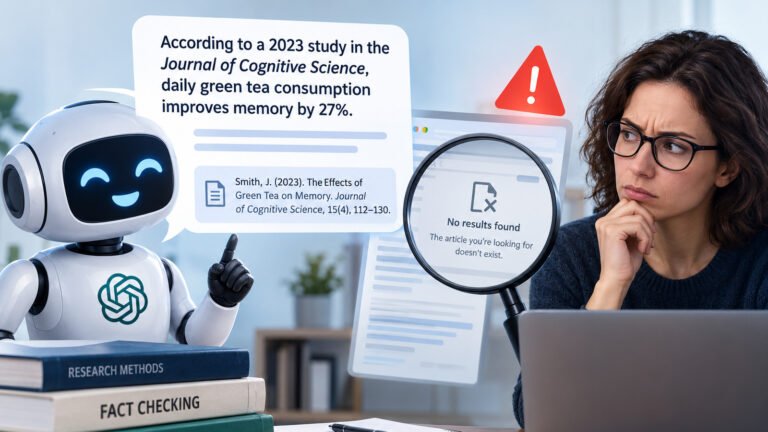
A citation makes an answer easier to investigate, not automatically more credible. ChatGPT can invent references or attach a real link to a conclusion the page doesn’t support. Verification therefore has two parts: establishing that the cited document exists and checking what it actually says. Passing the first test doesn’t mean the second has been satisfied.
How to Check If an AI Citation Is Real
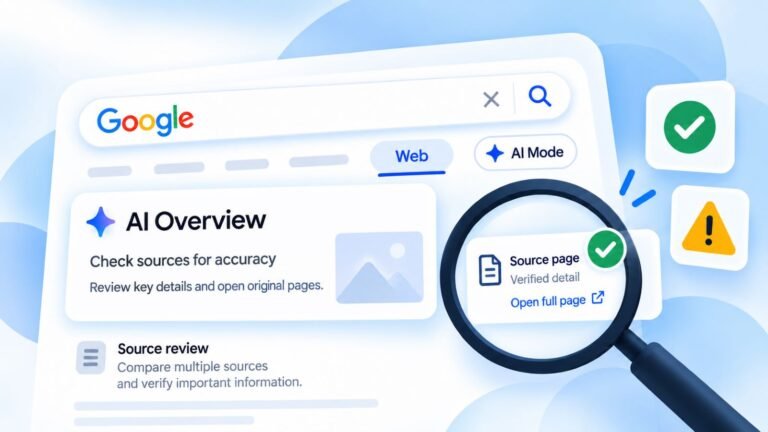
Open the link instead of relying on the title displayed in the AI response. Check the publisher or institution, then compare the document title, author, publication date, and other identifying details. For academic papers, look up the title or DOI in the publisher’s records or a scholarly index.
A broken URL doesn’t necessarily mean the publication was invented. Pages move, and some papers require a subscription or institutional access. Search the publisher’s website or a reputable index for the original record. Until you find it, don’t repeat a supposed quotation as if its origin has been confirmed.
When a Real Source Doesn’t Support the Claim
A subtler problem occurs when the publication exists but the AI exaggerates what it establishes. An official page might discuss minimum wages without confirming the rate or year in the answer. A research paper might report an association within one population while the AI presents it as a universal cause-and-effect finding.
Read the cited passage, its surrounding qualifications, and any relevant tables. Check who or what was studied, the dates involved, and the conclusion the authors actually reached. If the source doesn’t establish the statement as written, mark it unsupported or partly supported even though the link works.
How to Check AI-Generated Numbers, Quotes, and Dates
Different types of facts call for different checks. Percentages need denominators and time periods, while prices need currencies, markets, and dates. A quotation must match the original wording and context, not just resemble a sentence in a summary.
To verify AI-generated statistics, find the original table or dataset and examine its notes. Determine whether the figure is a total, rate, estimate, median, or average, and check units and rounding. If the answer says a value “doubled,” compare both endpoints rather than relying on that description.
Dates introduce another trap: the publication date may differ from the effective date. A rule announced in June might take effect months later, while specifications in an old manual may no longer describe the current product. Record the effective date, applicable location, and document version before treating the information as current.
For quotations, search a distinctive phrase in the original transcript, report, or publication. Read the surrounding sentences, not just the matching words. An omitted qualification can change the meaning. If you find only a paraphrase, do not present it as an exact quotation.
Can ChatGPT Fact-Check Its Own Answers?
ChatGPT can help organize a fact-checking task and identify evidence worth examining. It may flag contradictory figures or reveal where an answer relies on an assumption. Neither action independently proves a statement true. OpenAI’s accuracy guidance explicitly warns that convincing answers can contain errors or invented references.
Asking “Are you sure?” may produce a more cautious answer without correcting the underlying mistake. A stronger follow-up requests checkable assertions and original records that could substantiate them. If ChatGPT can search the web, request links to those records. Open the material yourself instead of treating the model’s description as independent confirmation.
List the factual claims in your previous answer that could change my decision. For each one, identify the original source I should check and explain what would count as confirming or contradicting it. Don’t treat your own previous answer as evidence.
This follow-up turns a request for reassurance into a list of testable statements. It fits into a broader practice of working with ChatGPT, but it doesn’t complete the verification on your behalf. The final judgment still depends on what the original documents establish.
What If You Can’t Find a Source or the Evidence Conflicts?
A claim without supporting evidence isn’t necessarily false, but you shouldn’t present it as established. Search for its distinctive wording, relevant location, and time period. Look for the original publication or a credible specialist source rather than collecting search snippets that repeat the statement.
When sources disagree, check whether they describe the same situation. One might give a federal baseline while another reports a higher state rate; one may also reflect an earlier rule. Compare definitions, dates, locations, and methods before treating the disagreement as a contradiction.
Several search results don’t necessarily provide independent confirmation. Ten articles may all repeat one press release, while a single government record can establish a narrow factual point. For disputed or high-stakes questions, seek evidence from independent organizations or qualified specialists when appropriate. There is no universal requirement for exactly two sources per claim.
If the evidence doesn’t resolve a claim, remove it, qualify it, or state exactly what remains uncertain. Failure to verify is not proof that something is false, just as a plausible explanation isn’t proof that it’s true. Sometimes the most useful outcome is identifying the question an authoritative source still needs to answer.
A Simple AI Fact-Checking Checklist You Can Reuse
A small verification log makes the process easier to review later. Record the statement, the material you personally checked, and a verdict supported by that evidence. Include missing qualifiers when a figure is accurate but doesn’t answer the full question.
| AI Claim | Evidence Checked | Verdict | Next Action |
|---|---|---|---|
| US federal minimum wage became $15 in 2026 | Department of Labor federal rate | Contradicted | Correct the federal figure |
| Every US worker must receive the same rate | Federal guidance notes exceptions and state laws | Overgeneralized | Check worker and location |
| An unnamed study proves a broad effect | No identifiable publication supplied | Unverified | Request title and original research |
| A quoted policy took effect immediately | Announcement date only | Unverified | Find effective date |
Choose the verdict based on what the document establishes, not on how persuasive the AI response sounded. “Supported” means the evidence matches the claim; “partly supported” means a material qualification is missing. Save the URL, access date, and passage when someone else may review your decision.
When Should You Stop Checking and Consult an Expert?
Some questions demand more than a careful search. Medical, legal, safety, and major financial decisions may depend on circumstances that general information cannot resolve. AI can help you prepare questions and organize documents, but a qualified professional may need to assess the final decision.
Stop relying on the answer if the controlling rule is unavailable, authoritative sources conflict, or a critical exception remains unclear. Tell the person making the decision exactly what has and hasn’t been confirmed. Consult the relevant professional or institution before acting on the uncertain point. Recognizing an unresolved question is a legitimate result of fact-checking.
Be selective with supporting documents. Before uploading contracts or client records, consider AI upload risks and remove information the task doesn’t require. Verifying one statement shouldn’t expose unrelated personal or confidential material.
Fact-checking AI answers isn’t about judging the technology as a whole. It’s about matching consequential statements to evidence and preserving the limits of what that evidence shows. When something remains unverified, say so rather than letting polished wording fill the gap. That habit makes AI a useful starting point without turning its output into an unquestioned authority.